

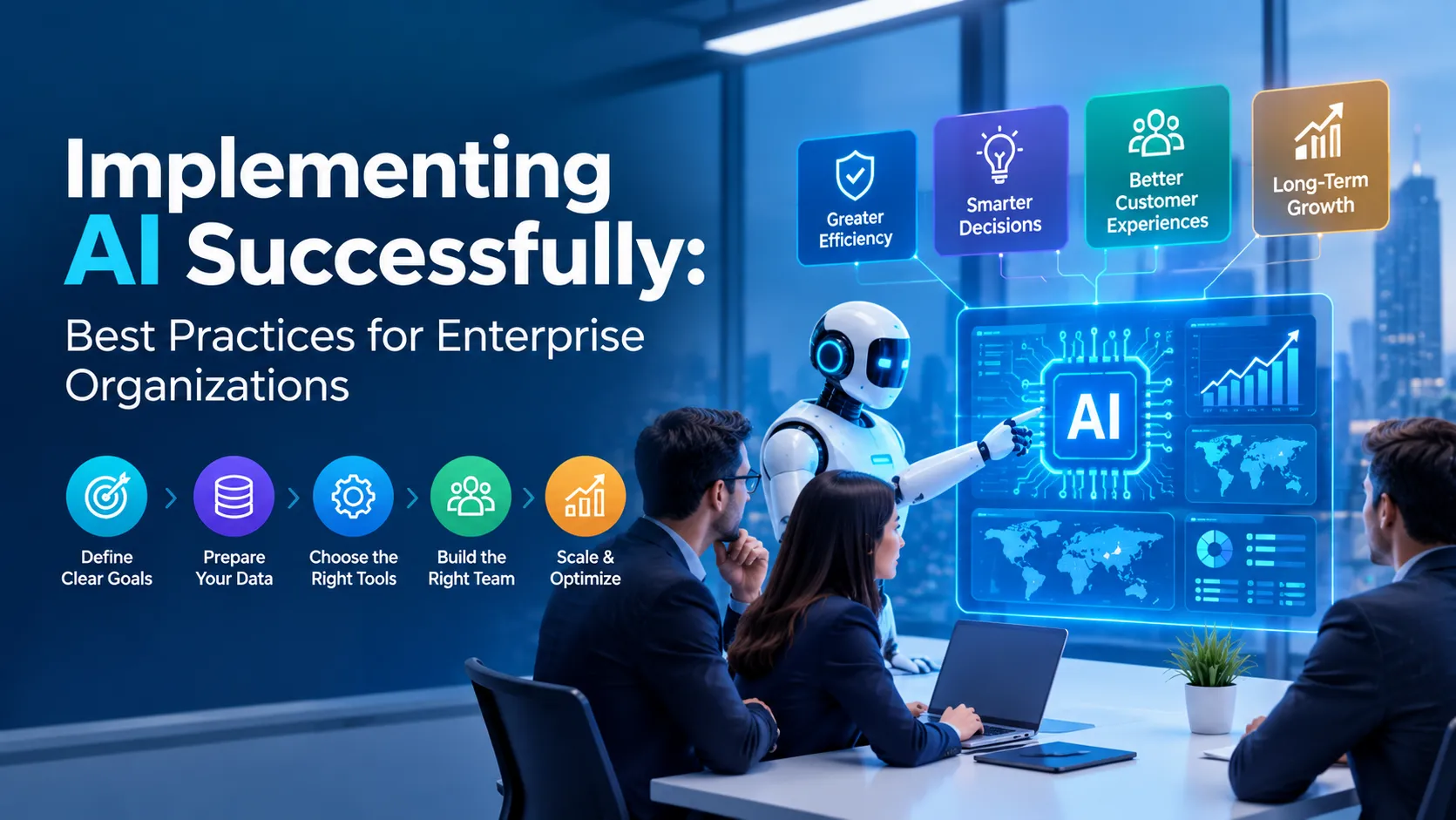
Implementing AI Successfully: Best Practices for Enterprise Organizations
Implementing AI Successfully: Best Practices for Enterprise Organizations
Many organizations struggle with AI implementation, starting with unclear objectives or inadequate preparation. This guide shares best practices that separate successful AI deployments from failed initiatives.
Critical Success Factors for AI Implementation
1. Clear Business Objectives
Define specific, measurable goals before starting any AI project. The best AI initiatives solve real business problems with quantifiable impact. Align AI strategy with overall business strategy.
2. Data Foundation and Governance
AI is only as good as the data it’s trained on. Establish robust data governance, ensure data quality, and create secure data pipelines. Invest in data infrastructure before deploying advanced AI models.
3. Cross-Functional Teams
Successful AI requires collaboration between business, technical, and domain experts. Include operations, compliance, and security teams early. Break down silos between departments.
Implementation Roadmap
Phase 1: Discovery – Identify high-impact use cases with available data
Phase 2: Pilot – Develop proof-of-concept with controlled scope
Phase 3: Scale – Roll out to production with proper monitoring
Phase 4: Optimize – Continuously improve models and processes
Managing Risks and Challenges
Common challenges include talent shortage, change resistance, and data quality issues. Address these by investing in training, communicating benefits clearly, and establishing strong data governance.
Measuring AI Success
Track both technical metrics (accuracy, precision) and business metrics (ROI, time-to-value). Set realistic expectations—many AI projects take 12-18 months to deliver full value.
The Competitive Imperative
Organizations that master AI implementation gain sustainable competitive advantages. The future belongs to companies that make AI part of their DNA, not a one-off project.

